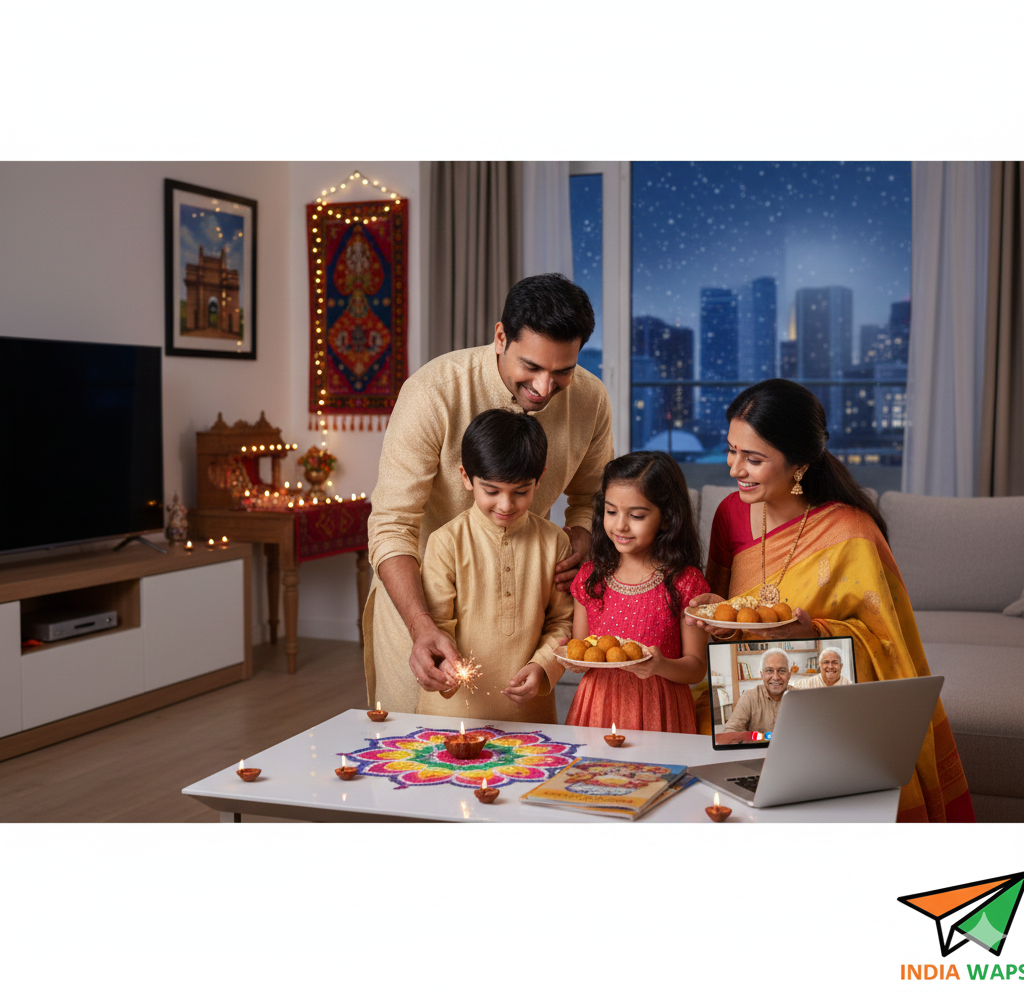
Teaching children about Indian culture while living abroad is a journey of creating a “mini-India” within your home. It’s less about formal lessons and more about weaving traditions into the fabric of their daily lives.
Here are some practical and creative ways to bridge that gap:
1. The “Home Tongue” Rule
Language is the strongest bridge to any culture.
- Designated Zones: Create a “Hindi-only” (or your mother tongue) zone, like the dinner table or during your evening walk.
- The Bilingual Strategy: If your child speaks to you in English, gently respond in your native language. This builds “passive fluency,” where they understand everything even if they are shy to speak it.
- Apps & Tools: Use fun, game-based apps like Shoonya or the government’s Bhasha Sangam to make learning the script feel like a game.
2. Festivals as “Experience Days”
Don’t just observe festivals; make them a production.
- Hands-on Participation: Let them make the Rangoli, roll the Ladoos, or help hang the Thorans.
- Storytelling: Don’t just light lamps for Diwali; read the Amar Chitra Katha or watch an animated version of the Ramayana together. Explain the “why” behind the ritual so it doesn’t feel like a chore.
- Invite Friends: Hosting a small Holi or Diwali party for their non-Indian friends helps your child feel proud of their heritage rather than “different.”
3. Grandparents: The Living Library
Grandparents are the most authentic link to your family’s history.
- Scheduled Video Calls: Make a weekly ritual where grandparents tell a story—whether it’s a fable from the Panchatantra or a story about your own mischievous childhood in India.
- Ancestral Research: Use a service like India Wapsi to help organize a “Back to Roots” trip where your children can see the house you grew up in or visit their ancestral village.
4. Immersion Through the Arts
- Food as Culture: Cooking is a sensory memory. Involve them in making Dosa batter or spice-tempering (tadka). The smell of certain spices will stay with them forever as the “smell of home.”
- Classes: Enroll them in classical dance (Kathak, Bharatanatyam) or music (Tabla, Carnatic vocal). It provides a structured environment where they meet other NRI kids with similar backgrounds.
- Movies & Music: Have a “Bollywood Night” or listen to regional folk songs during car rides.
5. The Power of “India Visits”
Nothing replaces the real thing.
- Living Classrooms: When you visit, take them to local markets, ride in an auto-rickshaw, and let them experience the “vibrant chaos” firsthand.
- Extended Stays: If possible, plan a visit during a major wedding or festival season so they see the community aspect of Indian life, which is often hard to replicate in the suburbs of the West.